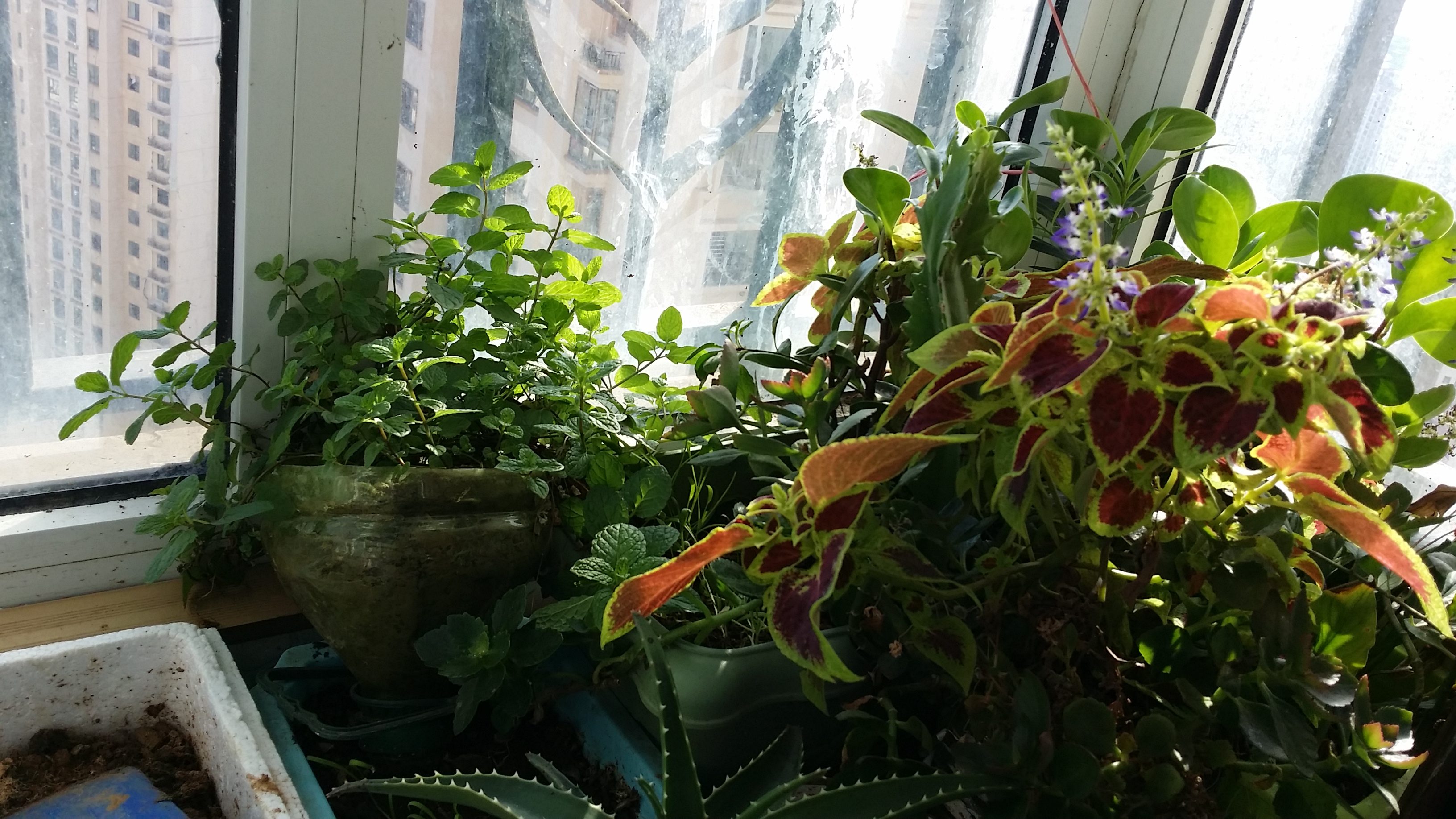
Before buying a single pot, spend a few days observing your balcony. Note how many hours of direct sunlight it receives, which direction it faces, and how strong the wind is at your floor level. High-rise balconies above the 15th floor often experience wind speeds that can damage delicate plants and dry out soil significantly faster than ground-level conditions.
Understanding Your Balcony Microclimate
The direction your balcony faces determines almost everything about what will grow successfully:
- South or west-facing (full sun, 6+ hours): Ideal for chillies, tomatoes, sweet potatoes, and most herbs. Temperatures can reach 38–42°C on the balcony floor surface in the afternoon.
- East-facing (partial sun, 3–5 hours): Well-suited to leafy greens like kangkong, bayam, and mint, which benefit from morning light and afternoon shade.
- North-facing or blocked (under 3 hours): Shade-tolerant ornamentals, ferns, and pothos work here. Edibles become challenging without supplemental lighting.
Floor level introduces an additional variable. Above the 20th floor, wind exposure accelerates evapotranspiration — soil in standard pots can dry out twice as fast as at lower floors. Grouping containers together and using windbreak netting at 30% shade density helps significantly.
Edible Plants
Leafy Vegetables
Bayam (Amaranthus sp.) is arguably the most forgiving vegetable for Singapore balconies. It tolerates high heat, germinates readily, and is harvest-ready within 3–4 weeks of direct seeding. Successive planting every fortnight ensures a continuous supply without gaps. Kangkong (water spinach) performs similarly but prefers consistently moist soil — a self-watering container or shallow water tray works well.
Bok choy and chye sim prefer cooler night temperatures. They perform best during the November–January inter-monsoon period when nighttime temperatures drop to the low 20s Celsius. In the hotter months, positioning them in east-facing morning-sun locations extends their productive period.
Herbs
Tropical herbs are naturally adapted to Singapore's conditions. Pandan (Pandanus amaryllifolius) thrives in containers with moderate watering and provides fragrant leaves year-round for local cooking. Curry leaf tree (Murraya koenigii) grows vigorously in a 30-litre pot once established, producing reliably throughout the year. Thai basil, lemongrass, and turmeric are all consistent performers that require minimal intervention once established.
Fruiting Plants
Compact chilli varieties, particularly bird's eye chilli (Capsicum frutescens), produce prolifically in 10–15 litre pots placed in full sun. Cherry tomatoes work on balconies but require careful water management — twice daily in hot weather — and trellis support for the vines. The bitter gourd is a traditional Singapore favourite: trained up a trellis or balcony railing, it provides both productive shade and a regular harvest from a single plant maintained across several months.
Ornamental and Structural Plants
Not every balcony plant needs to be edible. Bougainvillea thrives in Singapore's heat and rewards deliberate water stress — controlled drying encourages flowering. Heliconia species make dramatic focal points in larger containers. For screening, Thunbergia grandiflora (Blue Sky Vine) covers trellises rapidly with cascading blue flowers and handles Singapore's sun and humidity without complaint.
Succulents and cacti have become popular in Singapore balcony gardens, though they require the hottest, sunniest spots and fast-draining soil to avoid rot in humid conditions. They are not naturally suited to Singapore's climate but can survive with appropriate container selection and soil management.
Soil and Container Selection
Standard garden soil compacts in containers and becomes waterlogged during Singapore's heavy downpours. A blend of 60% cocopeat, 20% compost, and 20% perlite works well for most edibles. For fruiting plants requiring more nutrition, replacing some cocopeat with worm castings improves production noticeably.
Container size matters. Leafy greens work in shallow 20cm pots; fruiting plants like tomatoes and brinjal need at least 30–40cm depth. Fabric grow bags are increasingly popular — the air-pruning of roots through the porous walls produces dense root systems that support faster growth and better yields.
Watering in a Tropical Climate
Overwatering is the most common failure mode. Singapore's average annual rainfall of 2,340mm often supplements balcony irrigation naturally, but pots dry out faster than ground soil, especially on windy high floors. The finger-test: push a finger 2cm into the soil and water only when it feels dry at that depth.
For consistency and water efficiency, drip irrigation timers connected to outdoor taps are now widely available from local hardware shops and online. They are particularly valuable for anyone travelling frequently, as even two or three days without water during a hot spell can be fatal for fruiting plants.
Related reading: Containers, Soil, and Watering Systems: A Practical Guide and Rooftop Garden Setup in Singapore.